Noola Impact
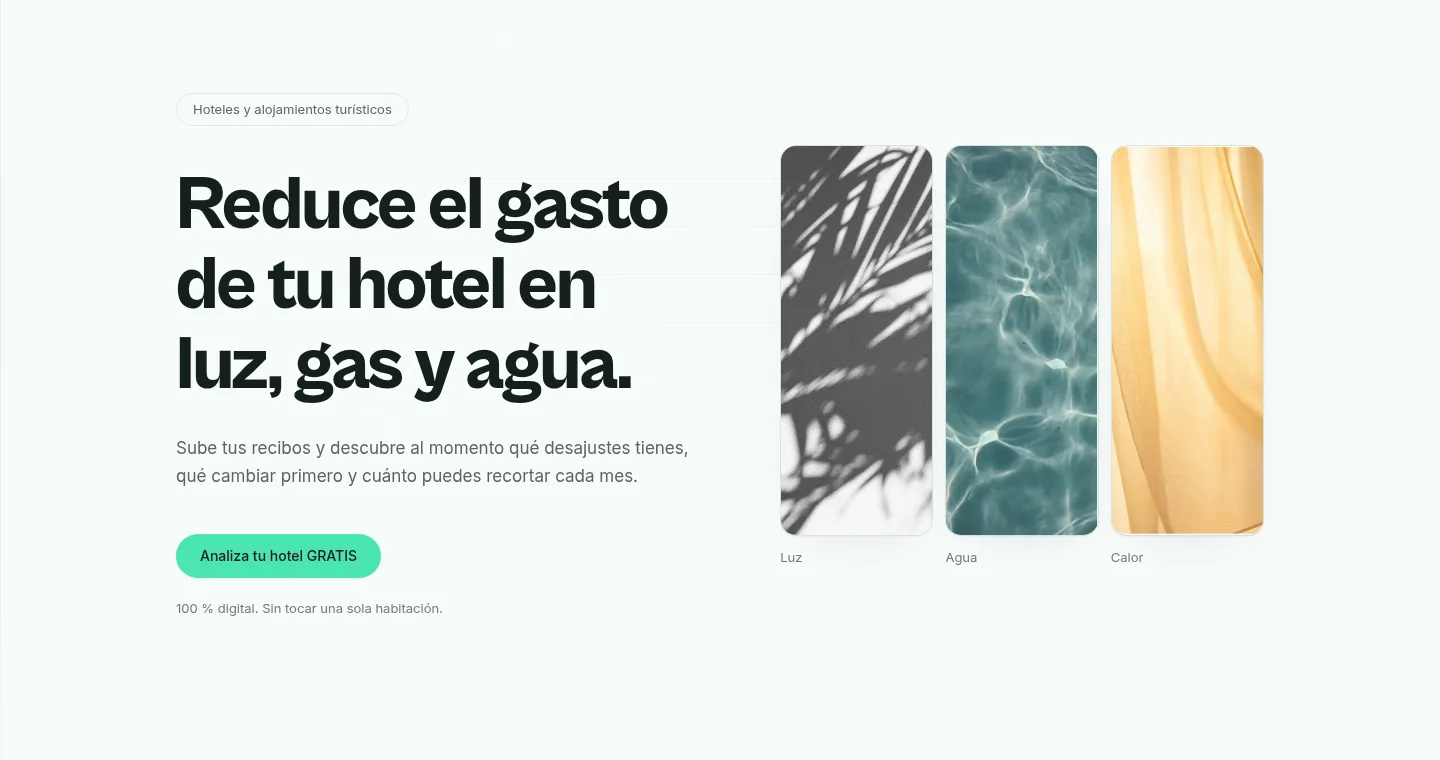
An energy cost platform, live in Spain, that turns uploaded energy bills into a clear plan for cutting running costs.
More detail
The problem
Energy bills are hard to read. Most accommodation owners can see how much they pay for electricity, gas and water, but not where they are overpaying or what to fix first.
Noola Impact solves that. You upload your latest bills, as a PDF or a photo from your phone, and answer a short questionnaire about your building. Noola then shows where the extra cost comes from, what to change first and how your property compares with similar ones. There are no sensors to install and no works to do.
My job was the part people touch. The path from uploading a bill to knowing your next step had to feel obvious.
Who it's for
Hotels and tourist accommodation of any size, including groups with several properties. The site also names hostels, tourist apartments, colivings and aparthotels. The platform is live in Spain.
What I built
I designed the interface and built the whole frontend. The backend was a Django app built by another developer, and I contributed a few changes to it.
- Sign-in and accounts.
- Bill upload, with files passed safely to the backend.
- Dashboards and reports that turned bill data into something you could read at a glance.
- Recommendations on what to change.
- Notifications.
- Paid upgrades with Stripe.
Stack
Next.js 16, React 19, Tailwind CSS, shadcn/ui, Zustand, SWR, NextAuth and Stripe Elements. The backend was Django.
Key decisions and why
Design and build as one job. I designed the interface and built it on Tailwind CSS and shadcn/ui, so the design system and the code were the same thing. There was no gap between a mockup and what shipped.
One door to the backend. The browser never talked to the Django backend directly. Every request, file uploads included, went through a Next.js route handler that passed it on. That kept backend details and secrets off the client and gave me one place to handle auth and errors.
Two kinds of state, two tools. Zustand held interface state, like which property you were looking at. SWR owned server data, like bills and reports, so it stayed cached and fresh without me writing that logic by hand.
Card details never touched our servers. Payments used Stripe Elements, so card details went straight to Stripe.
What happened after launch
Noola Impact is live in Spain at noola.eco. Sign-in, bill upload, dashboards, recommendations, reports, notifications and paid upgrades all run through the frontend I built.
What I'd do next
I am no longer working with Noola, so the next steps belong to their team. The frontend I handed over covers the full journey, from uploading a first bill to upgrading to a paid plan.
01 / The system
The frontend I built

02 / Results
- Live in Spain at noola.eco.
- Sign-in, bill upload, dashboards, recommendations, reports, notifications and paid upgrades all run through the frontend I built.
Next project
ArtSobo